Why Soccer is the Best First Sport for Your Child (and Why It’s Taking Over)
With 14.5 million players & a massive 23% growth since 2018, youth soccer is officially taking over the US. Discover why millions of parents are choosing soccer over football & why soccer is the ultimate first sport for building your child's confidence.
Choosing a first sport for your child can be a tough decision. You want something that builds confidence, keeps them active, and most importantly is safe.
In my latest video, Why Soccer is Taking Over, we explore why millions of parents are choosing the soccer field over the gridiron or the diamond. It’s not just about the game itself; it’s about a massive cultural shift in how we think about youth athletics, safety, and community.
If you’re on the fence, here is why soccer is currently the fastest-growing youth sport in the U.S. and why it might be the perfect fit for your family.
The Explosive Growth of the "Beautiful Game"
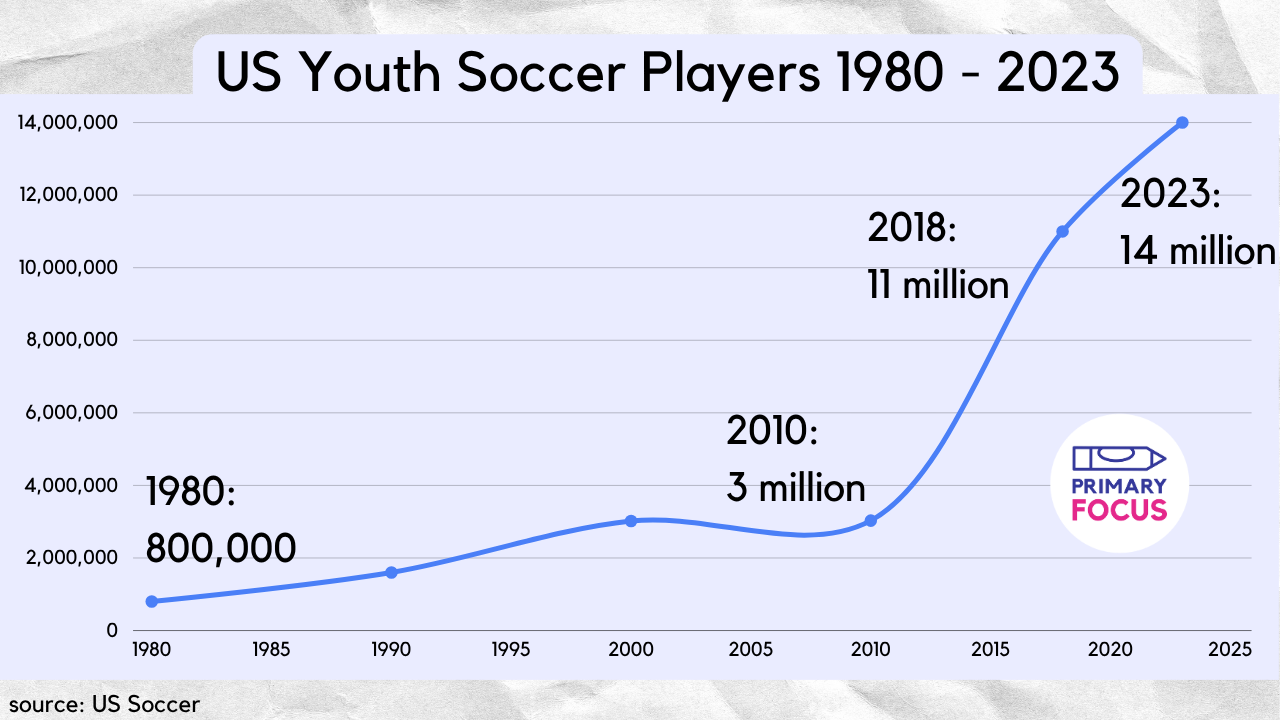
To understand why your local park is likely overflowing with mini-shinguards every Saturday, you have to look at the data. The trajectory of youth soccer in the United States is nothing short of a vertical climb.
When we look back at the numbers, the transformation of the sport is staggering:
1980: There were only about 800,000 youth soccer players in the country.
2010: That number more than tripled to 3 million.
2023: Participation skyrocketed to a massive 14.5 million players.
Perhaps most impressive is the recent momentum. Between 2018 and 2023, youth soccer saw a 23% growth in players.
US Youth Soccer saw a huge boom from 2018 to 2023 with an increase of 23%
While other traditional sports have seen participation numbers plateau or even dip (sorry football!), soccer is capturing the interest of a new generation of families at an unprecedented rate.
1. The Safety Factor: Soccer vs. Football
One of the biggest drivers behind this 23% growth is parent concern over high impact sports. While all sports carry some risk, soccer offers a lower impact alternative to sports like football.
It allows children to experience the thrill of competition and physical contact with a reduced risk of head injuries. As I noted in the video, the "safety first" mentality is a huge reason we’re seeing a shift in where parents enroll their kids.
2. Beyond the Ball: Developing Life Skills
Soccer is more than kicking a ball into a net; it teaches children important skills used on and off the pitch.
Coordination & Agility: Kicking a ball, tracking your teammates, and running at the same time takes some true coordination!
Teamwork: Teammates need to trust and communicate clearly with each other. This is not an individual sport.
Resilience: Learning to handle a missed goal or a tough game builds the kind of emotional "grit" that helps them in the classroom.
3. A Wholesome Community for "The Littles"
There is something undeniably special about "Saturday Morning Soccer." It’s one of the few places where you see little kids (as young as 2) learning the very basics of being part of a team.
Watching the pure joy of kids playing is a reminder of how wholesome youth sports can be. It creates a community for parents to connect and support one another, too.
Getting Started: Your First Practice Checklist
If you’re ready to sign up, don't overcomplicate it! Here’s all you really need for that first day:
Cleats & Shin Guards: Essential for safety and easy movement
Water & Snacks: Soccer is a high energy game! Teach your child how to fuel themselves before and after practice.
Want to dive deeper into the data and see the full breakdown? I go into much more detail about the cultural shift and what this means for the future of youth sports in the full video.